If AI Is the Only Career Conversation You're Having, You've Got It All Wrong
August 2026 Reading Round-Up
Normally, when I'm looking for my next great nonfiction, business, or self-development book, I want the latest and greatest information I can find.
So when I came across The Adaptation Advantage by Heather E. McGowan and Chris Shipley and saw that it was published in 2020, I had a moment.
2020?
Is this really the book I want to read about the future of work in 2026?
I took a chance and picked it up anyway.
And now?
I own the paperback, ebook, and audiobook versions.
So, yeah. It was totally worth it.
What surprised me wasn't simply how relevant the book still feels six years later. It gave me language for something I've been watching unfold in the workplace for many, many years.
And it starts on page 38 with three words:
Atomization. Automation. Augmentation.
The Future of Work Isn't Only About AI
McGowan and Shipley write:
“Three driving forces—atomization, automation, and augmentation—are dramatically reshaping work and will continue to do so for decades to come.”
Notice what they didn't say.
Artificial intelligence.
Remember, this book was published in 2020, before ChatGPT, Claude, or Perplexity became part of our everyday vocabulary and before generative AI became a regular part of conversations about jobs, careers, and the future of work.
McGowan and Shipley were talking about something broader.
How work gets done.
Today, it's easy to make every conversation about the changing workplace an AI conversation.
Will AI replace my job?
What tasks should I automate?
Should I be using Copilot?
Which AI skills do I need?
And those are important questions.
But The Adaptation Advantage pushed me to look beyond the technology itself and think about what is happening to work.
The authors describe three forces: atomization, automation, and augmentation.
And once I started thinking about work through that lens, I feel better equipped to face the future.
Atomization: What Is the Work, Really?
Atomization is the idea of breaking work down into its smallest component tasks.
What’s so important about this concept? We tend to think about our work in terms of jobs.
I'm a project manager.
I'm a recruiter.
I'm an accountant.
I'm a marketing director.
But your job title isn't your work.
Your work is made up of dozens, sometimes hundreds, of individual activities.
Some require judgment.
Some require creativity.
Some require relationships.
Some require institutional knowledge.
Some are repetitive.
Some are administrative.
Some probably shouldn't require a human being at all.
When we break a job apart and look at the actual work being performed, we can ask a much more useful question than:
Will technology replace this job?
We can ask:
Which parts of this work are changing?
That feels like a much more productive way to consider work.
Automation: What No Longer Requires Us?
Once work is broken into its component pieces, some tasks can be automated.
We've been automating work for a very long time.
AI has accelerated the conversation way past that, but automation itself isn't new. Remember electronic data interchange or EDI?
What is changing is the number and complexity of tasks technology can now perform.
That means professionals need to become increasingly thoughtful about where they're creating value.
If a task can be automated, that doesn't automatically make your experience irrelevant…it may change where your value lives.
Maybe the value isn't producing the report anymore…it's knowing what the report means, what the patterns are telling you, or how to best address a troubling trend.
Maybe it isn't scheduling the project…maybe it's recognizing that the project is heading in the wrong direction, what would prevent it from going that way, and recommending a better option.
Maybe it isn't creating the first draft…maybe it's having the judgment to know whether that draft is any good, infusing human stories into the document, or scrapping a draft and starting over with a better idea.
Automation will make time for deeper reflection and work that requires your personal touch. Sounds good to me!
Augmentation: What Becomes Possible When Technology Works With Us?
This is the piece I find most interesting.
Technology doesn't only replace tasks.
It can also expand what we're capable of doing.
That's augmentation.
This is where some of the conversation about AI becomes far more interesting than "Will AI take my job?"
What can you do now that you couldn't do before?
What can you do faster?
What information can you access?
What administrative work can you eliminate from your day?
Where can technology create capacity for the work that actually requires you?
I've been experimenting with these questions in my own practice.
Not because I want technology doing everything for me.
Quite the opposite.
I want technology handling more of the work that doesn't require me, so I can spend more time doing the work that does.
Coaching.
Thinking.
Writing.
Connecting ideas.
Working with clients.
Having conversations.
That's the power of augmentation.
And I suspect we're only beginning to understand what's possible.
The Adaptation Advantage
The authors write:
“By paying close attention to how these forces are reshaping work and our world, we can learn and adapt to maximize their transformative power, rather than fall victims to redundancy.”
Adapt. Maximize. Transform.
The answer isn't predicting exactly what technology will do next.
I don't think any of us can.
The opportunity is recognizing when our work needs to change and leading that change operation.
That requires us to loosen our grip on something many of us have spent decades building:
Our professional identity.
McGowan and Shipley write:
“...we are all works in progress and we need to imagine, or rather reimagine, work. In order to do that, though, we’re going to have to confront who we think we are, at least professionally, so that we can reimagine, and reimagine again, and again, who we are in the context of a changing future of work.”
Now that’s career management.
If your professional identity is entirely tied to a job title, an industry, a tool, or one particular way of doing your work, adaptation becomes incredibly difficult.
But if you understand the value underneath what you do, you have more room to evolve.
Your tools can change.
Your tasks can change.
Your title can change.
Your industry can change.
And you can still recognize yourself in the career you're building.
That feels especially important right now.
The irony…
I almost passed on picking up The Adaptation Advantage because I worried a book published in 2020 might already be outdated.
Instead, it became the book that helped me think differently about what's happening in 2026.
That's another lesson in itself.
New doesn't always mean more relevant.
Sometimes the framework we need already exists. We simply encounter it at the moment we're ready to see what it can teach us.
For me, that was atomization, automation, and augmentation.
And I'll be thinking about those three words for a long time.
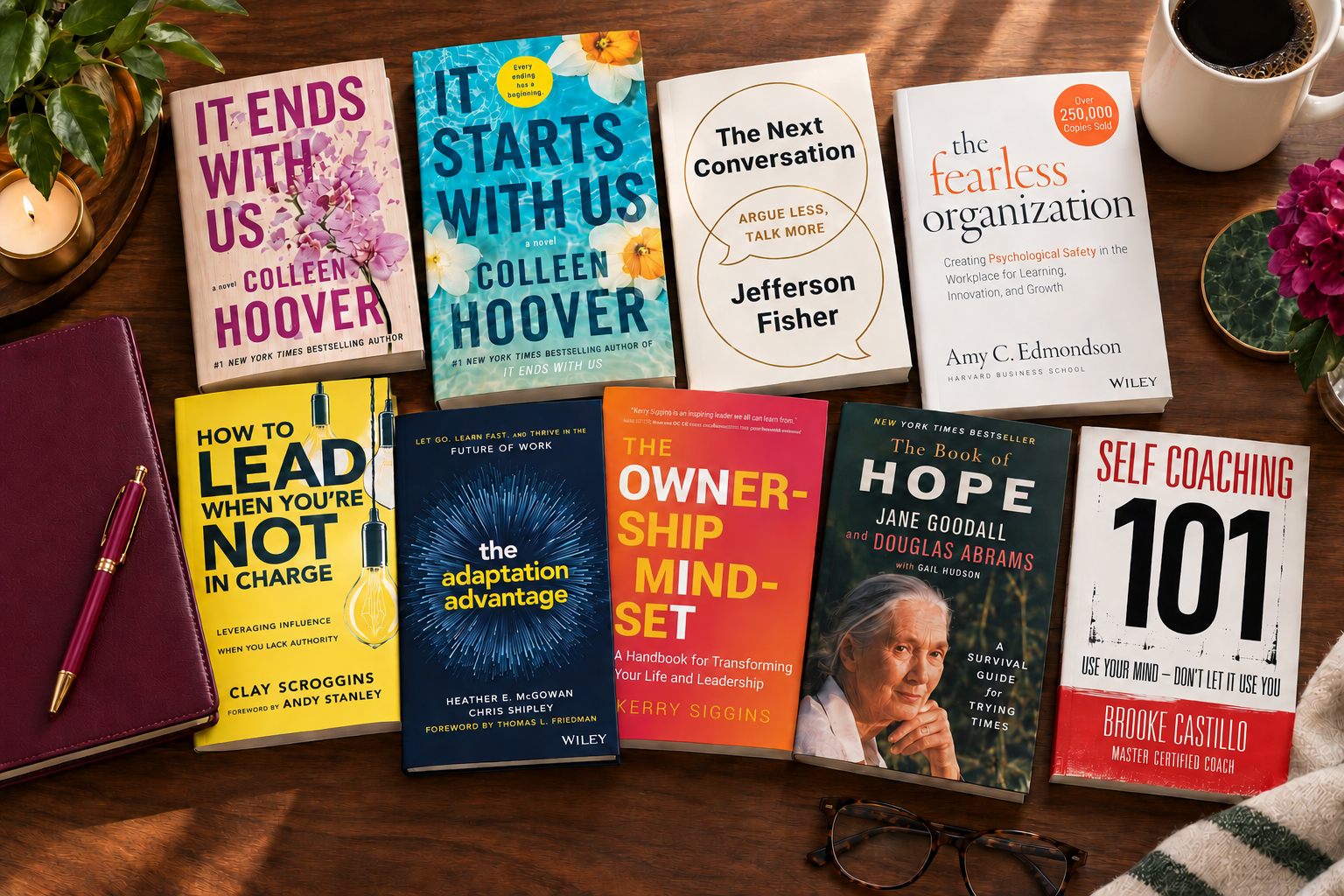
Books I Read | August 2026
I read eight more books in August, ranging from leadership and communication to hope, self-coaching, the future of work, and yes, a little Colleen Hoover curiosity.
Here are a few of the ideas worth sharing.
The Ownership Mindset by Kerry Siggins
“Don’t be afraid to make well-calculated bold moves.”
Self Coaching 101 by Brooke Castillo
“This model is designed for one purpose—to change the thoughts that cause you suffering.”
The Fearless Organization by Amy C. Edmondson
“Change is possible. It may be hard work, but cultures can and must change if organizations are to thrive in a knowledge intensive world.”
The Book of Hope by Jane Goodall and Douglas Abrams
“There is a famous saying, we haven’t inherited the earth from our ancestors, we’ve borrowed it from our children. And yet we haven’t borrowed it from our children, we’ve stolen it.”
The Next Conversation by Jefferson Fisher
“You’re living in a world of transmission, not a connection.”
It Ends With Us & It Starts With Us by Colleen Hoover
No quote from these two.
I read It Ends With Us and It Starts With Us out of genuine Colleen Hoover curiosity. They were quick reads with good stories, but they weren't quite as great as I expected.
Then again, novels aren't usually my first choice. Curiosity is reason enough to pick up a book.
DNF
How to Lead When You're Not in Charge by Clay Scroggins
I started this book, found some great quotes, and then lost my excitement for it halfway through. So I've added this one to my DNF list.
One of the quotes I did capture was:
“Leaders don’t sit back and point fingers, leaders lead with the authority of leadership or without it. The authority is largely irrelevant.”
There are too many books waiting to be read to force myself through one that isn't for me.
Continue Your Reading Journey
If one or more of these books caught your attention, I've gathered my August selections together on my Amazon Storefront.
Browse my August 2026 Reading Round-Up:
August 2026 Reading Round-Up on Amazon
More Reading + Development Ideas
If you're new to my Reading Round-Ups, you can catch up here:
February 2026 Reading Round-Up
One Final Thought
I've spent a lot of time this year thinking, talking, and writing about AI.
The Adaptation Advantage reminded me to widen the lens.
AI matters.
But the bigger conversation is about work.
How is your work being broken apart? What is being automated? Could be automated? Where could technology augment what you already do well?
And most importantly:
Are you adapting along with it?
That's a career conversation worth having.
Continue Investing in Your Career
If these ideas have you thinking differently about your own professional growth, you might also enjoy my book, Own Your Career: Take Control + Accelerate Your Professional Growth.
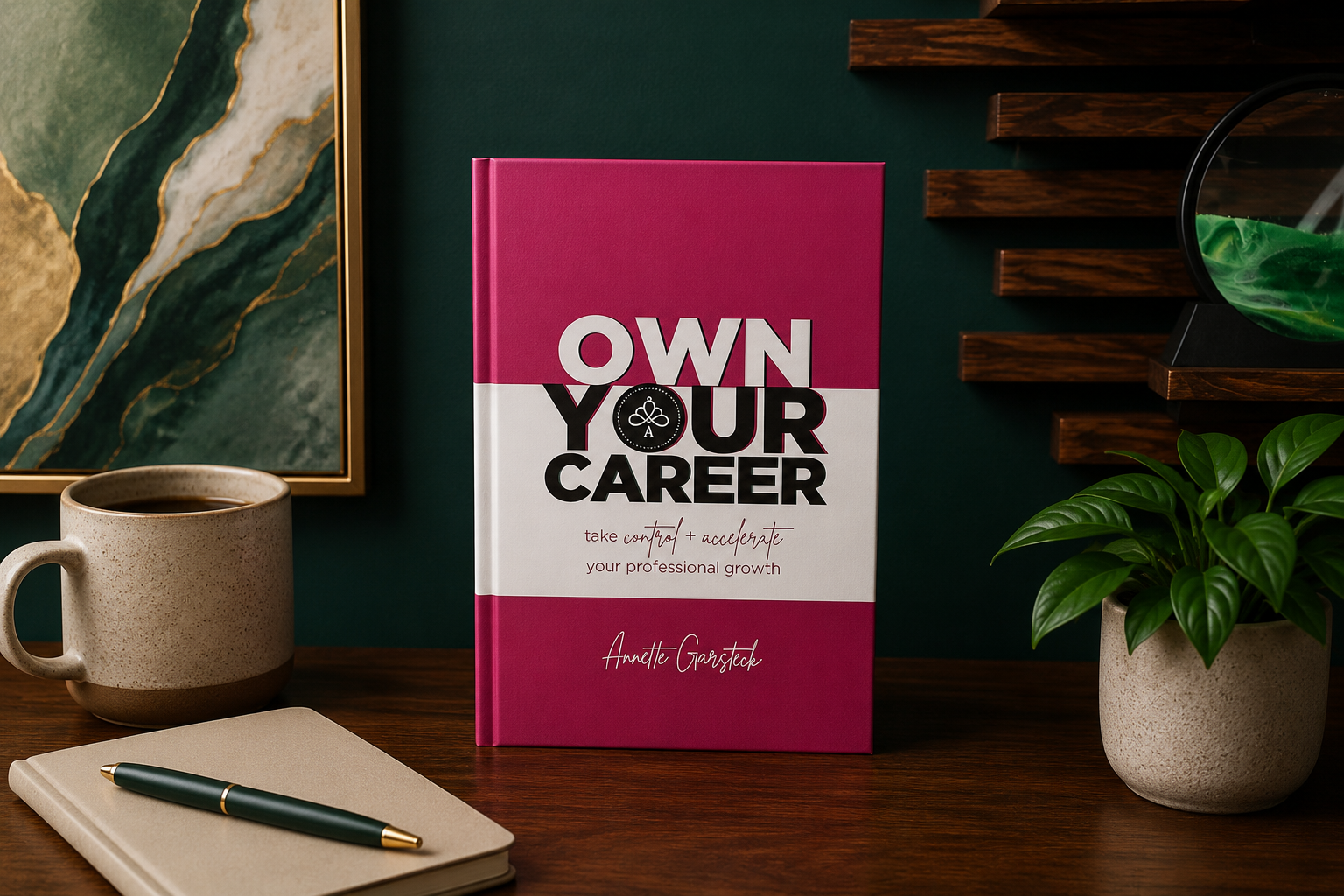
I wrote it to help professionals become more intentional about managing their careers instead of waiting for an employer, manager, or circumstance to determine what comes next.
As an Amazon Associate, I earn from qualifying purchases. Thank you for supporting my work through my Amazon Storefront.
