October 2026 Reading Round-Up
When was the last time you asked yourself what you're working so hard for?
I don't mean what you're working toward professionally. You probably have a pretty good answer for that. A promotion. A new opportunity. Growing your business. Financial security. Recognition for the work you've done.
I'm asking something a little different.
Does your current definition of success reflect the life you want to live?
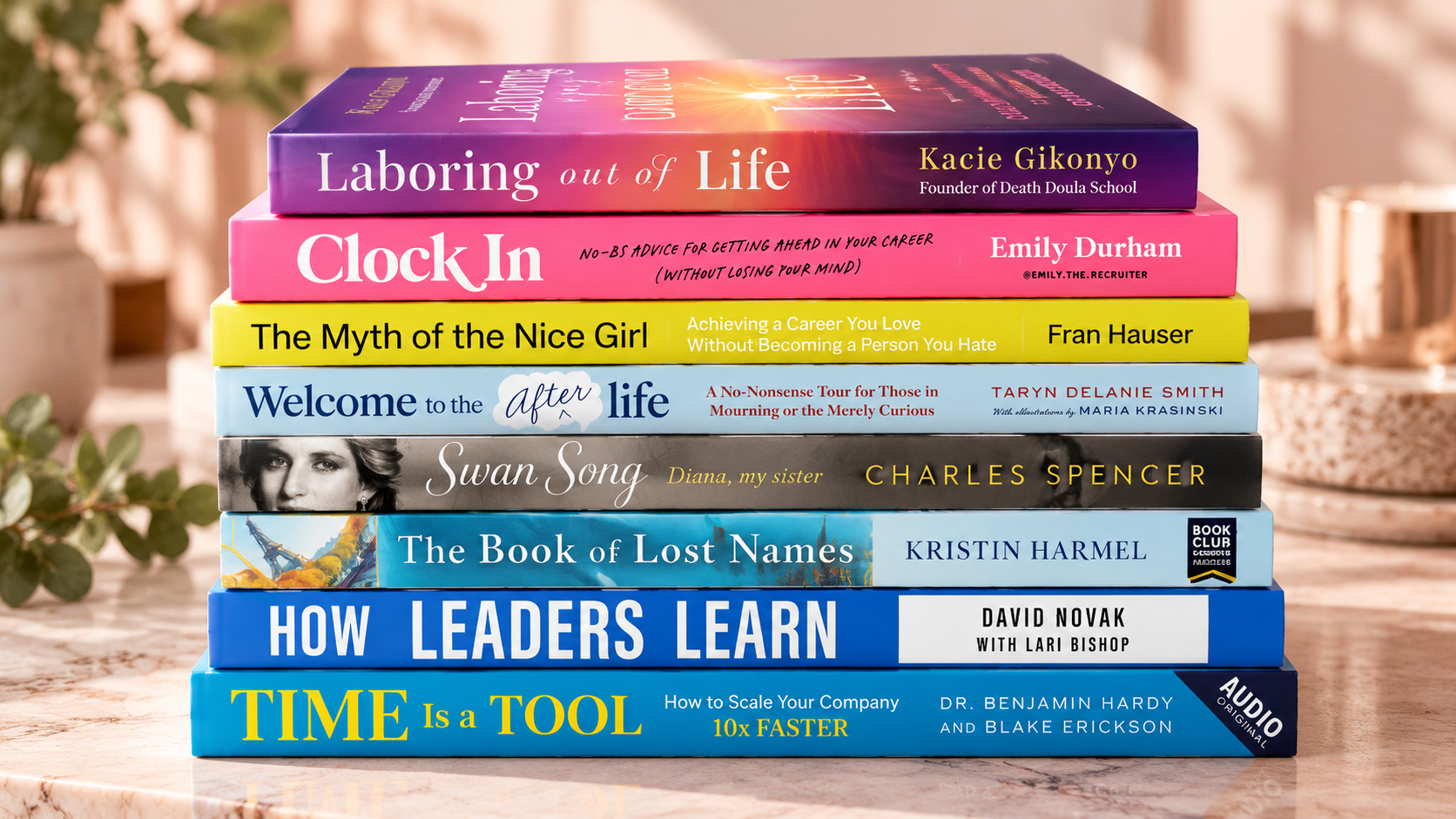
This question was a central theme that found me in three of my October books: Clock In by Emily Durham, Time Is a Tool by Dr. Benjamin Hardy and Blake Erickson, and Laboring Out of Life by Kacie Gikonyo.
This theme wasn’t in the title of any of the books, yet each author approached it differently, and together they had me thinking about ambition, the value of our time, and how our priorities change as we grow.
And they had me reflecting deeply on my own career.
Success Looks Different From Here
Early in my corporate career, I wanted to make my mark.
I worked hard, wanted to be recognized for my contributions, and wanted the people around me to see all that I was capable of accomplishing.
Being visible mattered to me. It still does.
But what I wanted from my career began to change.
In Clock In, Emily Durham writes:
"Aiming to have validation, purpose, and a lifestyle you enjoy is an incredible anchor that helps you make intentional decisions in your career."
I appreciate the inclusion of lifestyle in that statement.
We spend so much time talking about professional goals, career advancement, and what it takes to succeed. How often do we consider whether the career we're building supports the life we truly want?
When I decided to leave my corporate career, I didn't know exactly what was next. All I knew was it was time to go.
I no longer wanted to work for a skip-level manager whose leadership values conflicted with mine.
Competition seemed to matter more than creating success for the broader team. And I believe winning shouldn't happen at the expense of the people around you.
I had spent years building my career, but I wasn't willing to compromise my values to continue advancing in that environment.
I left because I valued myself and what I believed good leadership should look like.
That decision eventually opened the door to entrepreneurship.
Today, I enjoy mentoring others without the rigid constraints of managing employee performance. I get to share what I've learned, help people recognize their potential, and support them as they make important career decisions.
And increasingly, I appreciate something I didn't always prioritize earlier in my career: flexibility.
Over the past six months, my family has needed additional support. Being able to adjust my workload to accommodate those needs has become an important part of what success means to me.
I still have professional ambitions. I still want to make meaningful contributions.
But the way I measure success has definitely changed.
What Deserves Your Time?
Another October read, Time Is a Tool, challenged me to think about productivity.
Dr. Benjamin Hardy and Blake Erickson write:
"We want you to slow time down. When I say slow it down, I mean, really increase its value, dramatically. Slow time means you are making lots of progress."
I like the idea of increasing the value of our time.
For years, productivity was often associated with how much I could accomplish. There was always another meeting, another deadline, another item to check off the list. I know you must feel this pressure as well.
Today, productivity doesn't mean maintaining an enormous to-do list.
I've identified my non-negotiables. These are the things that deserve my time and attention, and I prioritize my work around them.
I've also stopped thinking about my workday as something that must happen between 9 and 5.
I find pockets of time wherever they appear and maximize them.
Some days, that means working earlier or later than I once would have. Other days, it means adjusting my schedule because someone in my family needs me.
I'm still getting things done. I'm more deliberate about what gets done.
Of course, not everyone has the flexibility to rearrange their workday. I recognize that being an entrepreneur gives me options that many employees don't have.
Even within a structured work environment, there's value in examining what deserves your attention.
— Which commitments are essential?
— Which expectations have you placed on yourself?
— What could you do differently to make room for something important to you?
We can't always control the demands on our time.
We can become more intentional about the commitments we make and the priorities we protect.
What Happens When Your Definition of Success Changes?
The third book that brought these ideas together for me was Laboring Out of Life by Kacie Gikonyo.
One passage reads:
"Your dying self is the version of you who no longer cares about perfection, reputation, or productivity. She cares about meaning. She cares about peace. She cares about whether you live your life in a way that felt true to you."
I have the pleasure of knowing Kacie personally, which made reading her book especially meaningful.
I'm incredibly proud of what she's accomplished. I've watched her pursue her vision with determination while remaining intentional about maintaining balance in her life.
And that's an important part of this conversation.
Ambition and balance can coexist.
You can be driven toward something you believe in while making thoughtful decisions about what deserves your time and energy. You can pursue meaningful goals without allowing those goals to consume every part of your life.
Kacie's example reminds me that we have more choices in how we define and pursue success than we sometimes give ourselves credit for.
And I have a slightly different perspective on reputation.
I don't believe we need to dismiss the professional reputation we've spent years building.
In fact, I encourage women in their 40s, 50s, and beyond to consider what they've already established.
You've developed skills. You've earned credibility. You've built relationships. You've demonstrated what you can accomplish.
What could you create with all of that now?
Maybe you want to move into a different role or industry. Maybe you're interested in entrepreneurship. Perhaps you're ready to pursue a dream you've been putting aside because other responsibilities always came first.
Or maybe you want to continue doing work you enjoy, with different boundaries around how much of your life it occupies.
You don't have to discard everything you've worked for to reinvent yourself.
Your reputation and experience can become the foundation for what comes next.
You do have to give yourself permission to want something different, something more.
And then you have to make room for it.
That means setting boundaries, protecting time, and treating your next ambition as something worthy of your attention.
After all, you've invested years helping organizations, teams, and other people succeed.
What would happen if you invested some of that same energy in your next dream?
Books I Read | October 2026
Beyond the three books that inspired this month's conversation, my October reading included leadership, kindness, historical fiction, and a touching perspective on loss and forgiveness.
How Leaders Learn: Master the Habits of the World's Most Successful People
David C. Novak
"Leaders are taught to delegate, but you have to avoid becoming disconnected, especially from the fundamental work of the business and the people making it happen."
The Myth of the Nice Girl
Fran Hauser
"Niceness and kindness are not the opposite of ambition and drive. It is powerful to choose to be nice."
The Book of Lost Names
Kristin Harmel
"...You're on me of us...you're someone who finds herself in the pages."
Welcome to the Afterlife
Taryn Delanie Smith
"We make it easy for you to not only forgive others, but to forgive yourself as well."
I discovered Taryn Delanie Smith through her social media character, Denise, Heaven's Receptionist.
Maybe part of my affection for Denise comes from the fact that I began my own professional career as a receptionist, after working as a barista.
But I think the first Denise video I saw was about the loss of a beloved pet. (Trust me, I tried to find it; above I shared a super funny one instead.)
As someone who loves her own pet dearly, I found the portrayal incredibly touching.
Welcome to the Afterlife is an illustrated book that approaches what happens after we lose the people and pets we love with warmth, humor, and compassion.
It's sweet, reassuring, and yes, it may have brought a tear or two to my eyes.
I think it's a lovely addition to a family's library.
Swan Song: Diana, My Sister
Charles Spencer
"A girl given the name of the ancient goddess of hunting was, in the end, the most hunted person of the modern age."
Written by Princess Diana's younger brother, this is a deeply personal account of how he learned about the car accident that would take her life and how he processed the loss.
Through memories of their childhood and experiences together as siblings, he shares a side of Diana that goes beyond her public image.
Beautiful, sad, and haunting.
Continue Your Reading Journey
If one of these books interests you, you can explore my reading recommendations through my Amazon Storefront.
Explore My Reading Recommendations
As an Amazon Associate, I earn from qualifying purchases. If you purchase a book through my reading list, I may receive a small commission at no additional cost to you. Thank you for supporting my work!
More Reading + Development Ideas
If you enjoy finding career insights in unexpected places, explore some of my previous Reading Round-Ups:
One Final Thought
I don't know if we ever reach a point when we have to stop being ambitious.
There will come a time when it's worth asking whether you're still pursuing the same definition of success you had ten or twenty years ago.
You may have built exactly the career you once wanted.
That doesn't mean you're obligated to want the same things forever.
Look at what you've accomplished. Consider the reputation you've built. Think about the opportunities your experience could create.
And then ask yourself:
What am I working so hard for, and is it still what I want?
You may discover that your next dream is waiting for you to make room for it.
Continue Investing in You and Your Career
If you're ready to take greater ownership of your professional future, my book, Own Your Career: Take Control + Accelerate Your Professional Growth, offers practical strategies to help you recognize your value, increase your visibility, and make more intentional career decisions.
Explore Own Your Career on Amazon
More Opportunities for Growth + Development
Looking for more conversations about work, life, and the experiences that shape us?
Listen to Exposing the Hidden Reality, the podcast I co-host with Sandra Wint, where we explore the personal and professional experiences that influence how we see ourselves and the world around us.
